|
Assemini, 19.9.2012
Egregio
Lettore,
di seguito
riporto gli elementi significativi pertinenti alla
moneta di figura:
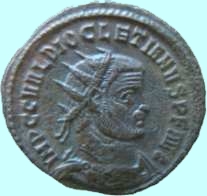
Antoniniano1, zecca di Antiochia2, 293÷295 d. C. , RIC
V/II 322 (pag. 256), Cohen
VI 34 (pag. 419), indice di rarità
"C"
Descrizione
sommaria:
D. IMP C C VAL DIOCLETIANVS
P F AVG3.
Diocleziano, busto radiato, paludato e corazzato
a destra.
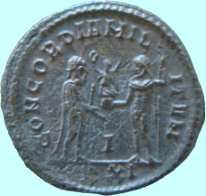
R. CONCORDIA
MI-LITVM4. L'imperatore, in abito militare,
stante a destra, riceve da Giove, stante a
sinistra, scettro verticale tenuto con la mano
sinistra, una Vittoriola su un globo che porge
una corona. Segno di zecca, I/XXI5.
La ricerca nel web di monete simili a
quella di figura ha prodotto i seguenti
risultati:
- http://www.vcoins.com/ancient/ccb/store/viewItem.asp?idProduct=429
DIOCLETIAN, AE Antoninianus, AD 284-305,
Antioch mint, (22mm, 4.13 gm) - RIC V
322 DIOCLETIAN. AD 284-305
(Bronze)Silvered AE-Antoninianus, (22mm,
4.13 gm) Antioch mint. Obverse: IMP C C
VAL DIOCLETIANVS P F AVG - Radiate,
draped, and cuirassed bust of Diocletian
right. Reverse: CONCORDIA MILITVM -
Emperor,standing right, holding sceptre,
receiving Victory on globe fromJupiter,
standing left, holding sceptre; I
between, XXI in exergue. Grade: good
Very Fine. Reference: RIC V 322; Cohen
34. Item Number: E 736. Price AUD$
75.00 US$ 78.82 € 60.23 £
48.60 CHF 73.24 CAD$ 76.69 Rates for
9/18/2012.
- http://www.deamoneta.com/auctions/view/59/246
Diocletian (284-305). Antoninianus
(21mm, 5.03g, 5h). Antioch, 293-295.
Radiate, draped and cuirassed bust r. R/
Emperor standing r., holding sceptre and
receiving Victory from Jupiter standing
l., holding sceptre; Z//•XXI. RIC V 322.
Green patina. Good VF Estimate: 30-40
Base d'asta: € 15 Prezzo realizzato: €
15.
- http://www.amazon.com/DIOCLETIAN-295AD-Genuine-Ancient-Jupiter/dp/B007RW4IIE
Item: i18601 Authentic Ancient Coin of:
Diocletian - Roman Emperor: 284-305 A.D.
- Silvered Bronze Antoninianus 22mm
(3.42 grams) Antioch mint: 295-297 A.D.
Reference: RIC V 322 IMP C C VAL
DIOCLETIANVS P F AVG, radiate, draped
and cuirassed bust right. CONCORDIA
MILITVM, Diocletian holding parazonium,
standing left receiving Victory on globe
from Jupiter who is holding a spear, I
in center, .XXI in exergue. In Roman
mythology, Jupiter or Jove was the king
of the gods, and the god of sky and
thunder. He is the equivalent of Zeus in
the Greek pantheon. He was called
Iuppiter (or Diespiter) Optimus Maximus
("Father God the Best and Greatest"). As
the patron deity of ancient Rome, he
ruled over laws and social order. He was
the chief god of the Capitoline Triad,
with sister/wife Juno. Jupiter is also
the father of the god Mars with Juno.
Therefore, Jupiter is the grandfather of
Romulus and Remus, the legendary
founders of Rome. Jupiter was venerated
in ancient Roman religion.
- http://www.worthpoint.com/worthopedia/forvm-diocletian-20-nov-284-mar-305-95899769
Sold Date: 10/25/2009 Channel: Online
Auction Source: eBay Category: Coins
& Currency Diocletian, 20 November
284 - 1 March 305 A.D. 37043. Silvered
antoninianus, RIC V 322, VF, cleaning
scratches, Antioch mint, 3.801g, 22.1mm,
180 o, obverse IMP C C VAL DIOCLETIANVS
P F AVG, radiate, draped and cuirassed
bust right; reverse CONCORDIA MILITVM,
Diocletian holding parazonium, standing
left receiving Victory on globe from
Jupiter who is holding a spear, Z in
center, XXI in ex.
- http://www.cngcoins.com/Coin.aspx?CoinID=52205
729710. Sold For $65 DIOCLETIAN. 284-305
AD. Antoninianus (22mm, 4.27 gm).
Antioch mint. Struck 293-295 AD. IMP C C
VAL DIOCLETIANVS P F AVG, radiate,
draped, and cuirassed bust right /
CONCORDIA MILI-TVM, emperor standing
right, holding sceptre and receiving
Victory from Jupiter standing left,
holding sceptre; Z//•XXI. RIC V 322. EF,
traces of silvering remaining.
- http://hobbyblog.blogspot.it/2006_01_15_archive.html
Silvered Æ antoninianus, Diocletian,
Antioch, RIC 322 IMP C C VAL
DIOCLETIANVS P F AVG, Radiate draped
cuirassed bust right | CONCORDIA
MILITVM, Jupiter standing left
presenting Victory to Diocletian
standing right. H in field, XXI in
exergue. Following the deaths of Carus,
Carinus, and Numerian, Gaius Aurelius
Valerius Diocletianus became sole
emperor, and presided over a time of
great change. He instituted a tetrarchy
in which two senior emperors ruled as
Augusti, supported by two junior
emperors, or caesarae, who were next in
line to rule, at which time a new caesar
would be appointed. The system was meant
to eliminate instability during the
succession, but required a degree of
selfless dedication that exceeded what
the men of power were willing to live up
to without Diocletian's strong
authoritarian hand. He promulgated price
controls on staples which, predictably,
made the staples unavailable at any
price. His reorganization of the legions
was more successful. While this coin,
minted early in Diocletian's reign,
begins the obverse legend with IMP C
(imperator caesar), the coins soon
displayed D N (dominus noster) and
signalled the end of the Principate, a
last vestige of ideals of the emperor as
the first among equals, and the
beginning of the Dominate, with its
notion of the emperor as the godlike
master of all. In 305, Diocletian, in
poor health, retired along with his
co-emperor Maximianus, to be succeeded
by the caesars, Constantius Chlorus and
Galerius. By 308 the tetrarchy system
was in such disorder that that he was
called out of retirement to a council at
Carnuntum, but refused to take up the
purple again and continued in retirement
until his death in 316.
Concludo
osservando che le caratteristiche
fisiche, generali e di stile della
moneta appaiono non difformi da quelle
dei conî d'epoca.
Un saluto cordiale.
Giulio De Florio
-------------------------------
Note:
(1)
Raccolgo in tabella le caratteristiche
fisiche degli antoniniani preriforma
di Diocleziano della tipologia di
figura presenti nei link
di cui sopra:
| Riferimenti |
Peso (g.) |
Asse di conio
(ore) |
Diametro (mm) |
| Link1 |
4,13 |
- |
22 |
| Link2 |
5,03 |
5 |
21 |
| Link3 |
3,42 |
- |
22 |
| Link4 |
3,80 |
6 |
22,1 |
| Link5 |
4,27 |
- |
22 |
Dai dati in tabella emerge che
l'antoniniano in esame presenta
caratteristiche fisiche (4,39g, c. 24mm,
11h) che non si discostano
da quelle delle monete
analoghe del periodo.
(2) La
zecca di Antiochia in Siria,
operava al tempo su 10
officine, contrassegnate
dalle lettere greche A, B,
Γ, Δ, ε, ς, Z, H, εΔ, Ι,
ordinate alfabeticamente.
Come si vede, per
scaramanzia il gruppo εΔ
sostituì la lettera Θ,
iniziale di θάνατος che vuol
dire morte. Le officine 7÷10
batterono monete con
leggenda del dritto estesa (
IMP C C VAL DIOCLETIANVS P F
AVG), le rimanenti officine
monete con leggenda breve
(IMP C C VAL DIOCLETIANVS
AVG). Secondo il Ric, la
moneta di figura fu battuta
nell'arco temporale 293÷295
d. C.
(3)
IMPerator Caesar Caius
VALerivs DIOCLETIANVS Pius
Felix AVGvstvs. Elementi
storici relativi alla vita
di Diocleziano sono
disponibili in altra pagina
di questo sito (come si vede
cliccando
qui).
(4)
"CONCORDIA MILITVM". Si
noterà che Giove è presente
sul rovescio della moneta in
quanto nume tutelare di
Diocleziano. Si veda in
proposito il concetto
teologico alla base del
sistema tetrarchico, oggetto
di una precedente
trattazione (v. cliccando
qui). Monete della
Concordia furono battute
nello stesso periodo anche
nel nome di Massimiano
Erculio (leggenda del dritto
IMP C MA MAXIMIANVS P F AVG
- RIC V/II 621, pag. 294 v.
link),
a significare la
collaborazione dei due
augusti nella gestione
dell'Impero.
(5) Il
segno di zecca I/XXI è
composto dalla lettera I,
contrassegno dell'officina
monetale (v. nota2) e
dalle lettere XXI,
introdotte nel 274 d. C. da
Aureliano negli "aureliani"
a indicare che 20 di queste
monete, messe insieme,
posseggono lo stesso
contenuto d'argento di
un'ipotetica moneta del peso
di un aureliano ma in
argento puro. |